

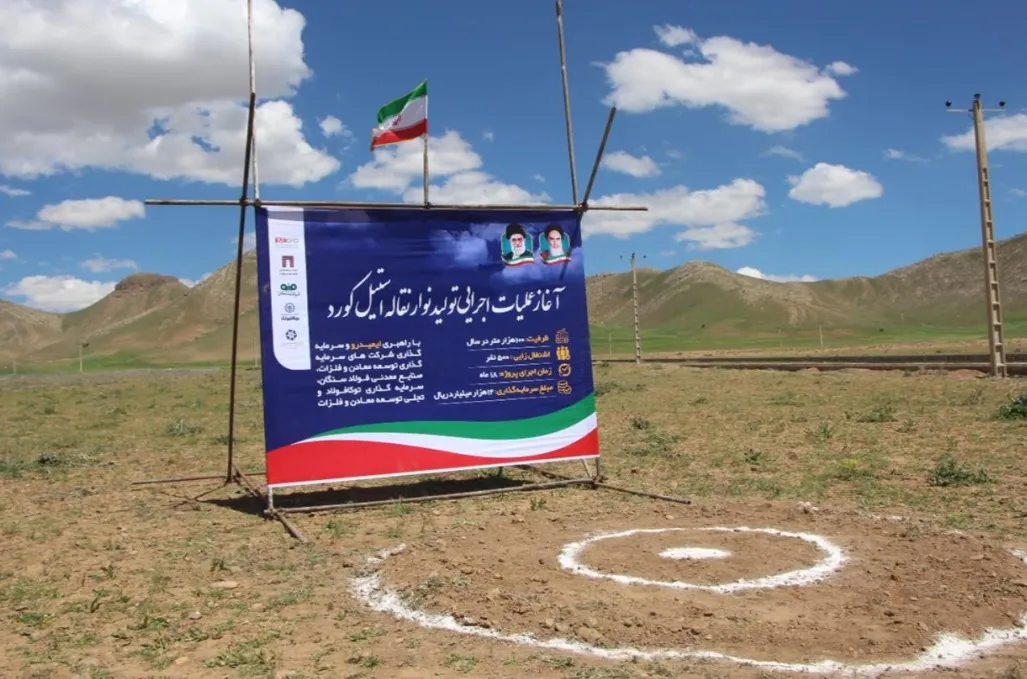
Aleshtar steel cord conveyor belt plant construction project: producing a strategic product in Aleshtar for the first time in Iran
In Ordibehesht this year, the textile-reinforced and steel cord conveyor belt plant project began in Aleshtar with special support from the Ministry of Industry, Mine and Trade, IMIDRO, Mobarakeh Steel and Mines and Metals Development Company, as well as the determined efforts of the parliamentary representative of Selseleh and Delfan.
According to Kanisa Public Relations, the county is at the beginning of its development journey. Establishing a major industry represents hope for those seeking industrialisation and improved economic conditions. The project has therefore strengthened hopes for faster industrial, economic and social development and for the region to become the birthplace of Iran’s steel cord industry.
Kanisa’s Deputy for Projects and Planning explained that much of the project’s basic preliminary research had been completed during the initial stages. After sufficient initial confidence was gained and information collected and refined, more comprehensive economic, technical and financial feasibility studies were carried out by the company’s investment consultant—a member of the Association of Credit and Investment Consultants with an A-1 rating—under the supervision of the company’s statutory auditor.
Najiollah Keshavarz said the studies showed the project to be attractive in economic, financial, technical and market terms, as well as a fundamental step towards the company’s strategic objectives and vision. The main financing prerequisites had therefore been met, and shareholders would soon provide the necessary funds following the relevant legal procedures.
Keshavarz said the project was being implemented on a 6.4-hectare site in Aleshtar Industrial Estate, with the necessary water, electricity and gas infrastructure and initial funding of 1,200 billion tomans.
He added that the project enjoyed support from the Selseleh and Delfan representative, Lorestan’s governor, Selseleh’s county governor, other provincial and regional officials, and local residents. Its anticipated contribution to sustainable development and management’s practical commitment to maximising local engineering, manufacturing and implementation capabilities during construction and operation had earned strong public acceptance.
Regarding the project’s outlook, Keshavarz said its first phase would produce 4,000 tonnes of steel cord and textile-reinforced conveyor belts to strengthen the value chains of steel, mining and other industries using conveyors in their production processes.
Discussing steel cord belts, the Deputy for Projects and Planning said the product was currently imported. Domestic manufacture would meet local demand, prevent foreign-currency outflows and create export earnings.
He noted that first-phase commissioning was envisaged for the first half of 1404 (Solar Hijri), expressing hope that this major event would bring greater prosperity and development to this part of Iran.